Main Content
Welcome!
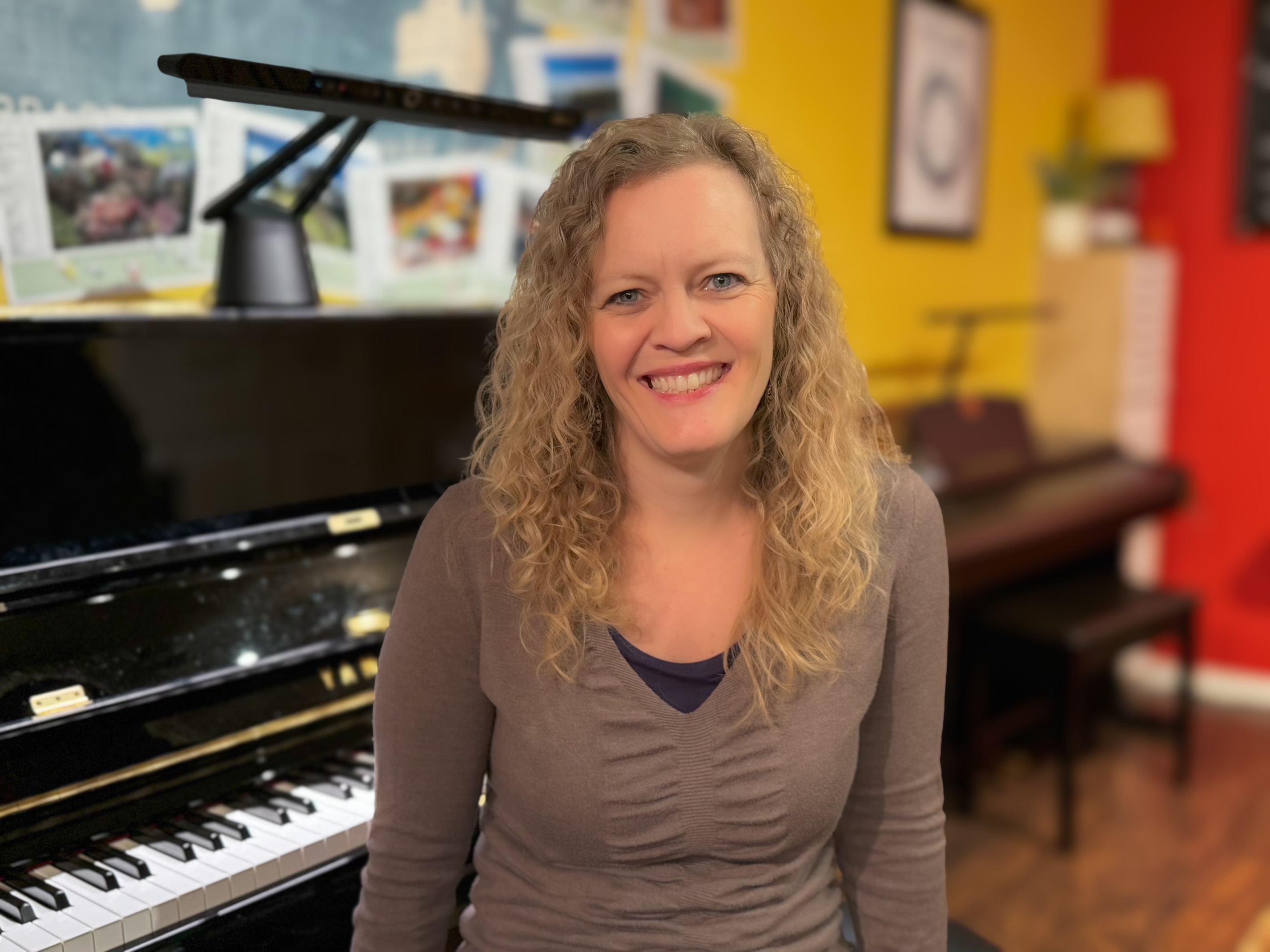 Hi! It's great to have you here in my virtual home. I love inviting other teachers and students to join me in my studio, so I hope you'll feel at home here as well. Teaching piano has been one of the most formative experiences of my life and has led me down many paths to learn about business, technology, communication, childhood development, and more. Much of that makes its way onto the blog, so check out the areas below for oodles of ideas and resources! It's my hope that your visit here will ignite a greater love for teaching and inspire a new creativity as you invest in the lives of your students each day.
 I love hearing from readers, so feel free to drop me an email anytime with your comments, questions, ideas, or suggestions for posts or materials you'd like to see here on Music Matters Blog.
The Latest
- Practice Incentive Brings Unusual BlessingsDrawing inspiration from Proverbs 11:25: “Whoever brings blessing will be enriched,” I included an element in this year’s practice incentive theme where students could opt to… Read more: Practice Incentive Brings Unusual Blessings
- Welcome to… Books Perfect for Piano Camp or Group ClassHave you seen the Welcome to… series of books by Carolyn Sloan? I used this Welcome to the Symphony story a couple years ago as part… Read more: Welcome to… Books Perfect for Piano Camp or Group Class
- Music Escape Room for Group ClassAs I mentioned following our last piano group class, I’ve been trying to figure out game and activity ideas that will work well for a mixture… Read more: Music Escape Room for Group Class
- Recording Piano Practice with FruitsOne unexpected way that I often see my students’ personalities come out is in their assignment books. We have a custom assignment book that correlates with… Read more: Recording Piano Practice with Fruits
Music Matters Store
Testimonials
As another Christian teacher with the goal to give students this gift of music, I just want to say thank you for the WONDERFUL resources you provide for us!! I am currently using the Mastering The Mystery Of Music incentive program, and my students are LOVING it! I can’t believe how excited they are to do their weekly challenge even without the bribes of candy and prizes (besides the seemingly far away recital)! Your work and your willingness to share the material is MUCH appreciated!
- T.W.
I purchased your Vanishing Voices practice incentive. I just wanted to thank you for giving me some added interest to my lesson year. The kids enjoyed earning points to see where they could go, and they each studied a specific composer for their recital. In addition, they became composers themselves, and each wrote a song. It added structure, enthusiasm, and some needed motivation for all of us! Keep up the good work! I’ll definitely be purchasing one again next year!
- Becky F.
Beyond motivating me to start a blog about my own work in music education, I have adopted some of Natalie’s practices within Music Box Studio. Ten weeks ago, at the beginning of Term 2, I introduced my students to what is the first practice incentive theme both they and I have experienced. It has definitely enthused my students in their pursuit of furthering themselves musically, so thank you Natalie for the great idea!
- Samantha D.
I recently purchased your C2 [practice incentive theme]. Thanks so much! Love your incentive programs. I buy a new one every year!
- Debby C.
My students are feeling more motivated to practice than usual, because of the Ladder (to Success!) we now have on the wall and the sheets that go along with it - it really makes a difference to have short-term AND long-term goals. Thanks very much!
- D.T.
I’m a pianist and school music teacher, and I follow your blog regularly. I have been very interested in the Classical education philosophy, and I’ve been especially excited about your Carnival of the Animals project. I started looking through the workbook, and I’m very pleased with the quality of the program…Thanks for all your hard work!
- J.M.
We used Go for the Gold last semester and my kids absolutely loved it! So did their parents! Parents said they didn’t have to ask their child/children to practice, they just did it! It was so fun.
- L.W.
I am very excited about this practice incentive! The main thing I like about Exploring a Galaxy of Music is the team work. I think it will work out fine with the younger students, as everyone works together.
- H.N.
Your blog has easily been the thing that has helped me the most in my teaching. I check it faithfully, and I learn something almost every time. I have purchased a lot of your stuff and it is really wonderful.
- C.R.
Your practice incentive Climbing the Ladder to Success was a huge success this year. The kids love them. Thank you for sharing such wonderful work with us. It’s really a blessing to me and to everyone you reach out to. I am looking to purchase and plan my next incentive for this year.
- K.S.
I recently purchased the Pre-Piano Camp to use with 2 of my children (we have a week- or 2-week-long theme during the summer with a 1 hour daily learning time based on that theme). I just want to let you know that they ~love~ your camp so far! Thank you for this great, easy-to-use resource!
- C.S.
My students are using the “Beat the Pirates” theme this year, and they are having a lot of fun with this theme. It even inspired us to plan a pirate-themed recital for spring. =)
- Kori B.
I want to especially thank you for providing the incentive programs for me. Your creativity in developing these materials is astounding! They are way underpriced!
- Sylvia C.
I purchased your Beat the Pirates! today and I already love it and think it will be a big hit in my studio!! Thanks for all your hard work and for sharing the fun with us!!
- Julia A.
My students really loved An Italian Intrigue this year, so I’m sure they would like the Beat the Pirates! theme too!
- Julia T.
I am a fan of these studio incentives! We have loved “Vanishing Voices” this year. Looking forward to doing another one.
- Cheryl R.
Vanishing Voices was so worthwhile to acquaint them with composers and collect those travel miles. It’s so great when a student comes to the lesson and talks about their accomplishments and goals, even without me asking. I’m so appreciative of you sharing these resources!
- Sylvia C.
I just purchased your Go For the Gold! package and we are implementing it this fall! These packages are a GREAT deal, you get all of the ideas, templates and books for 1 low price.
It hit me in the spring that we spend SO much time preparing for the 30-60 minutes in-lesson, but 168 hours at home are not addressed with the same excitement. Our studio will have Teams, we will have a team flag, team colors, team mascot and team anthem (written by one of our students). So excited, and THANK YOU Natalie for these products!
- Kelly K.
My students love your programs. Thx for all the time and effort you put in to each program.
- Ellen O.
Carnival of the Animals is a fantastic curriculum. Thank you so much for writing it!
- Kristy A.
Your Carnival of the Animals camp curriculum is so organized,creative, comprehensive, and fun! It was a blast and I can’t wait to do it again…My students absolutely loved it!
- Laura F.
I love all of your practice incentives and have used some of them with great enthusiasm in my piano studio.
- Jennifer C.
I was thrilled with the student’s enthusiasm last year using Jungle Expedition…Thanks so much for these terrific resources, Natalie.
- Sylvia C.
I’m really excited to start the fall and SO HAPPY that I have [the Vanishing Voices] incentive program for the school year.
- Tammy P.
My students are enjoying their Jungle Expedition this year!
- Marie M.
We used Go for the Gold last semester and my kids absolutely loved it! So did their parents! Parents said they didn’t have to ask their child/children to practice, they just did it! It was so fun.
- L.W.
Thanks so much for all you do – I use your site regularly and have used e.p.i.c. in the past with great success!
- M.M.
I love practice incentives! You totally got me started doing them, my students CAN.NOT.WAIT to find out what our new theme is each year!
- Heidi N.
We have used your incentives two years at our small Christian school. A contest really encourages students to practice and get to the next level. Even the display helps other students want to take lessons.
- C.R.
I’ve used the Mastering the Mystery of Music program from you with fantastic success!
- V.M.
I love ALL your incentives!
- S.D.
My students go crazy over Go For the Gold. You have no idea. I have used some of your others too. I really want to try another one!
- S.F.
I used your Go For the Gold practice incentive around an Olympics and it got the students really focused. Thank you.
- B.G.
I have been using your incentives for a few years now and appreciate all the work you do in preparing them. It keeps my students learning theory in a less boring way.
- L.L.
I’m a pianist and school music teacher, and I follow your blog regularly. I have been very interested in the Classical education philosophy, and I’ve been especially excited about your Carnival of the Animals project. I started looking through the workbook, and I’m very pleased with the quality of the program…Thanks for all your hard work!
- J.M.
Thanks so much for the info about Mastering the Mystery of Music! We are loving it so far.
- L.S.
Last year we did the An Italian Intrigue practice incentive theme—so much fun!
- E.F.
I have used Go For the Gold and Let’s Have a Ball in the past and loved them!! Thanks for sharing your talents with us!
- J.P.
Thanks so very much for the e.p.i.c. practice incentive theme! This looks so wonderful!
- P.W.
 Teaching Ideas
 Business
 Resources
 News
NewsMusic Community Friends
Joy Morin: Color in My Piano
- Announcing: My 2024 Piano Teacher Retreatby Joy Morin on April 5, 2024 at 1:28 pm
Hello friends, Recently, I have received a handful of email inquiries asking for updates about my 2024 Piano Teacher Retreat. So I thought I should […]
- Color In My Piano Blog Turns 15!by Joy Morin on March 4, 2024 at 9:59 pm
Hard to believe, but ColorInMyPiano.com just turned 15 years old! Hooray! Let’s celebrate with our annual 20% off sale — details below. I started […]
- Your Qs Answered, and How I Use Notion to Manage...by Joy Morin on February 29, 2024 at 11:27 am
As my friend Amy Chaplin and I prepare for our upcoming online workshop about how to use Notion (a productivity/note-taking app we are both fans of), […]
Amy Chaplin: Piano Pantry
- Friday Finds #273by Amy on April 12, 2024 at 9:05 am
1 It is so sad to hear of Susan Paradis’s passing. Susan was a gem in the early world of online content for piano teachers. 2 In early May, […]
- Friday Finds #272 – MTNA 2024 Conference Newsby Amy on March 29, 2024 at 9:00 am
Welcome to a special edition of Friday Finds! I thought it would be fun to follow the 2024 Music Teacher National Conference in Atlanta with a list […]
- 27 of Amy’s Favorites on Saleby Amy on March 22, 2024 at 7:59 pm
Amazon is running its Spring Sale from March 20 - 25, 2024. I did some leg work for you and compiled all items from my favorites lists that are […]
Teach Piano Today: Blog
- Audience-to-Student Compliment Cards for Piano...by Trevor on April 22, 2024 at 8:37 pm
At your piano recital, a year’s worth of dedication and practice takes the stage. It’s a perfect opportunity to reward your students for their […]
- Rise and Shine! Good Morning Note Reading...by Trevor on April 15, 2024 at 8:00 pm
What is the first thing your piano students do when they rise and shine? Practice note reading? Unlikely 🙂 But with the strategy and printable […]
- Just Dropped! The Scarlet Solos – Epic Teen...by Trevor on April 8, 2024 at 6:36 pm
“The Scarlet Solos” is more than a piano book; it’s a gateway to a world where music dances between light and dark, mystery, and heroism. […]
Jennifer Foxx: Music Educator Resources
- 10 Musical Ways to Celebrate Leap Dayby Jennifer Foxx on February 22, 2024 at 2:30 pm
Leap year only happens every 4 years, so why not turn the week of leap day into something fun? Here are 10 musical ways you can celebrate leap day! […]
- The Power of One Word in Student Success (Music...by Jennifer Foxx on January 20, 2024 at 2:01 am
In this music teacher tip, I will be sharing 5 ways you can liven up your Halloween performance event! I like to rotate these ideas over the years, […]
- No Book Beginners Reviewby Jennifer Foxx on December 14, 2023 at 12:22 am
*The following review includes Amazon affiliate links. These links do not increase the price you would pay, but help support reviews such as this […]